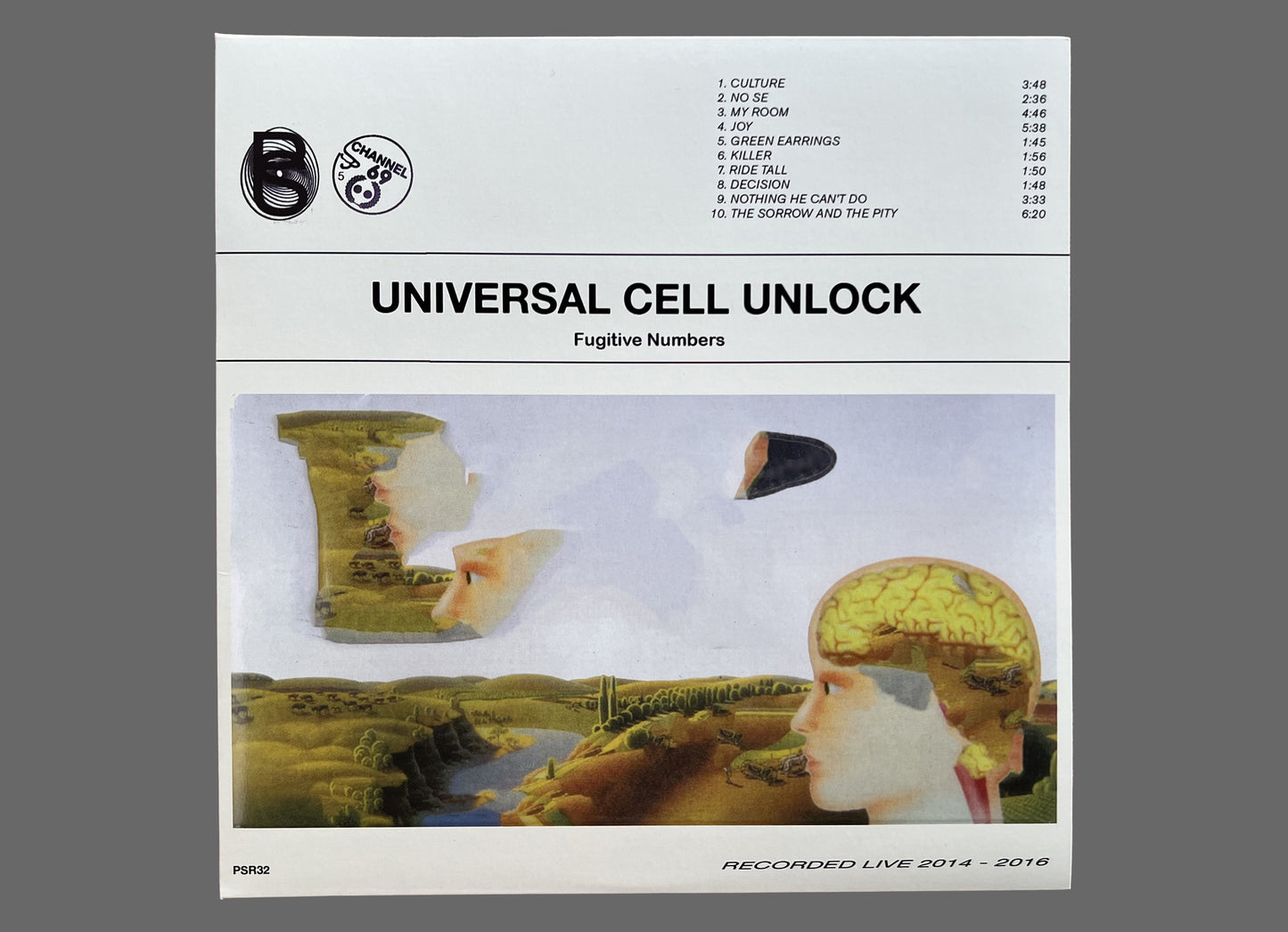
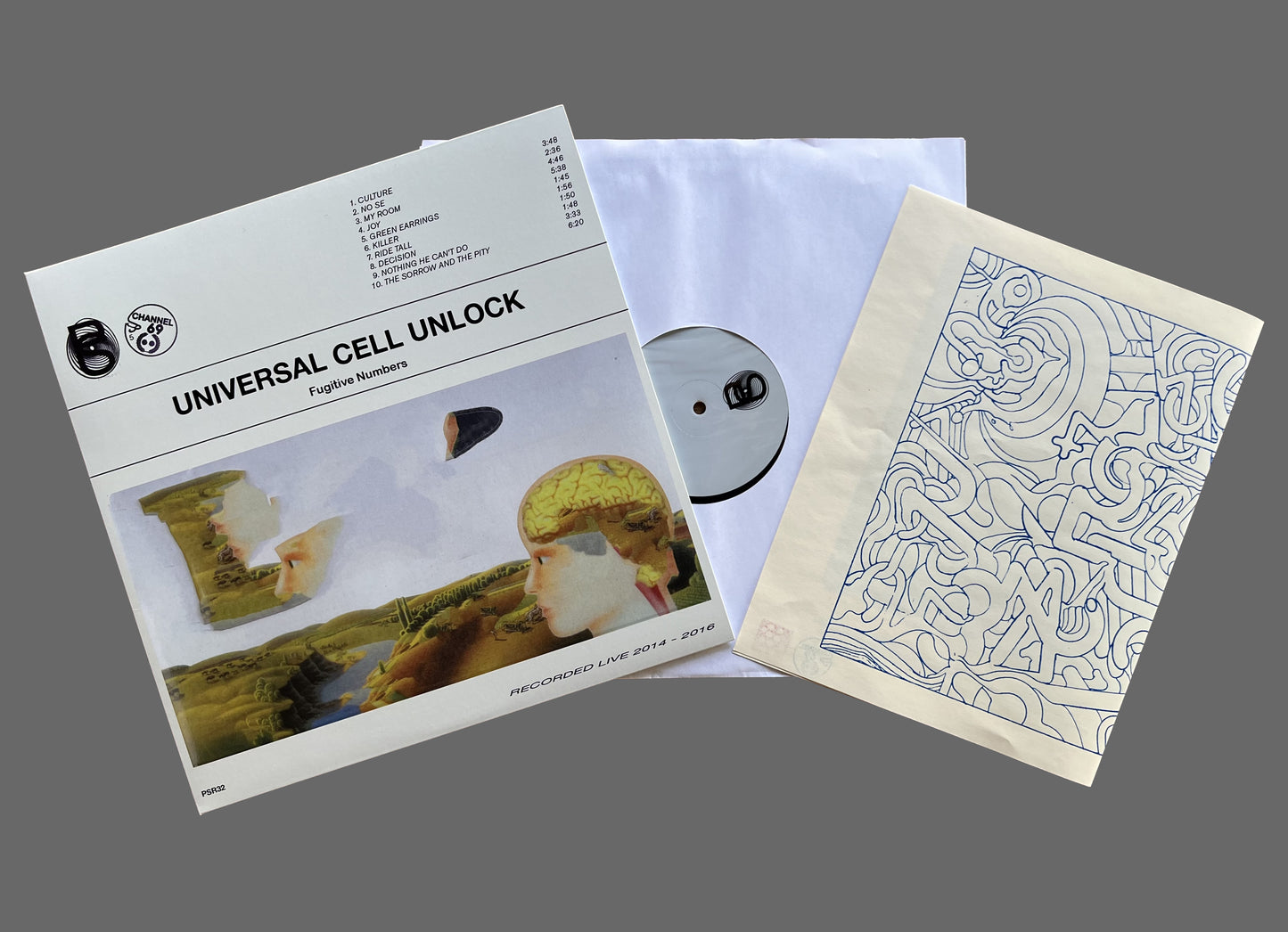
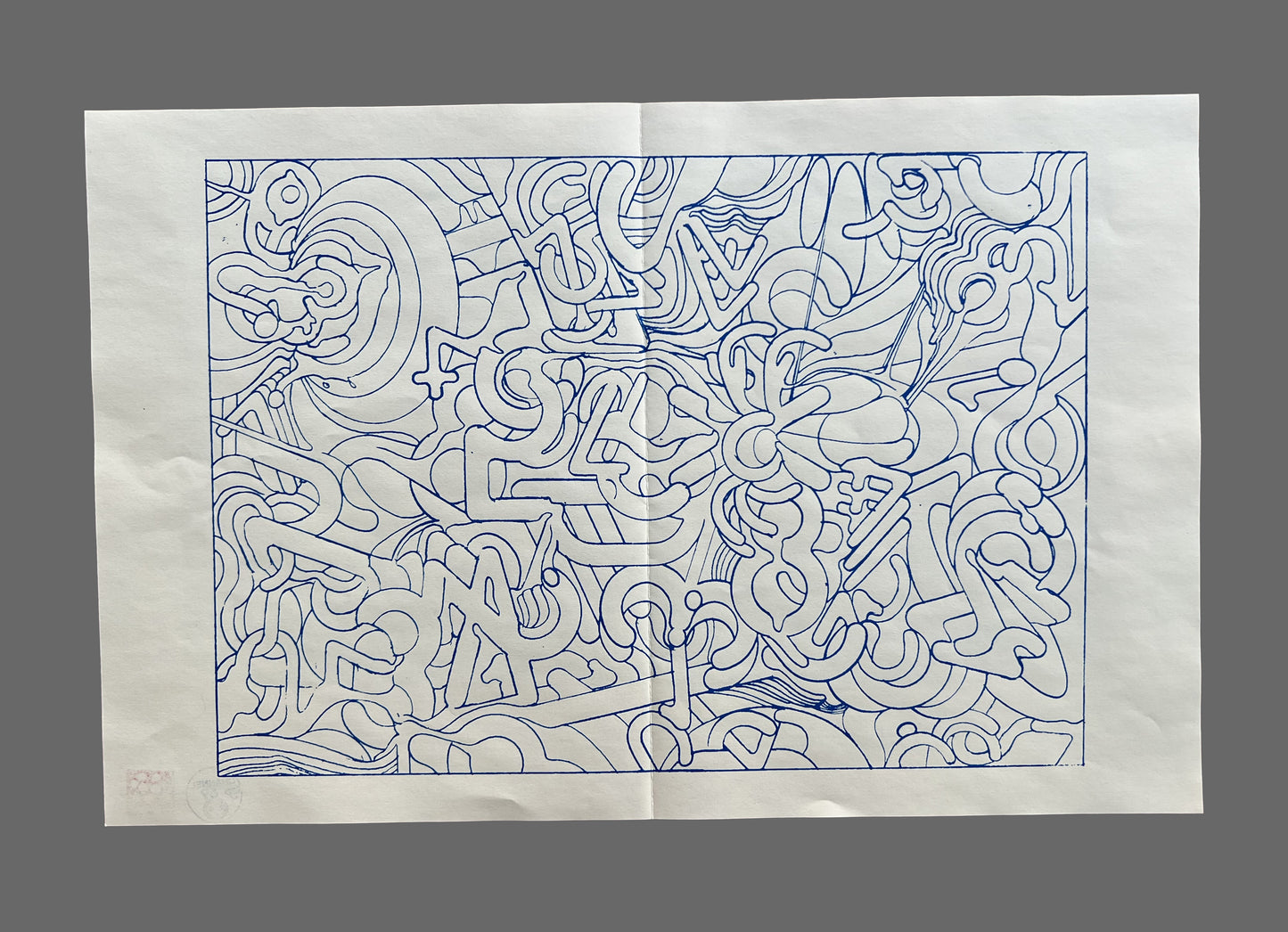
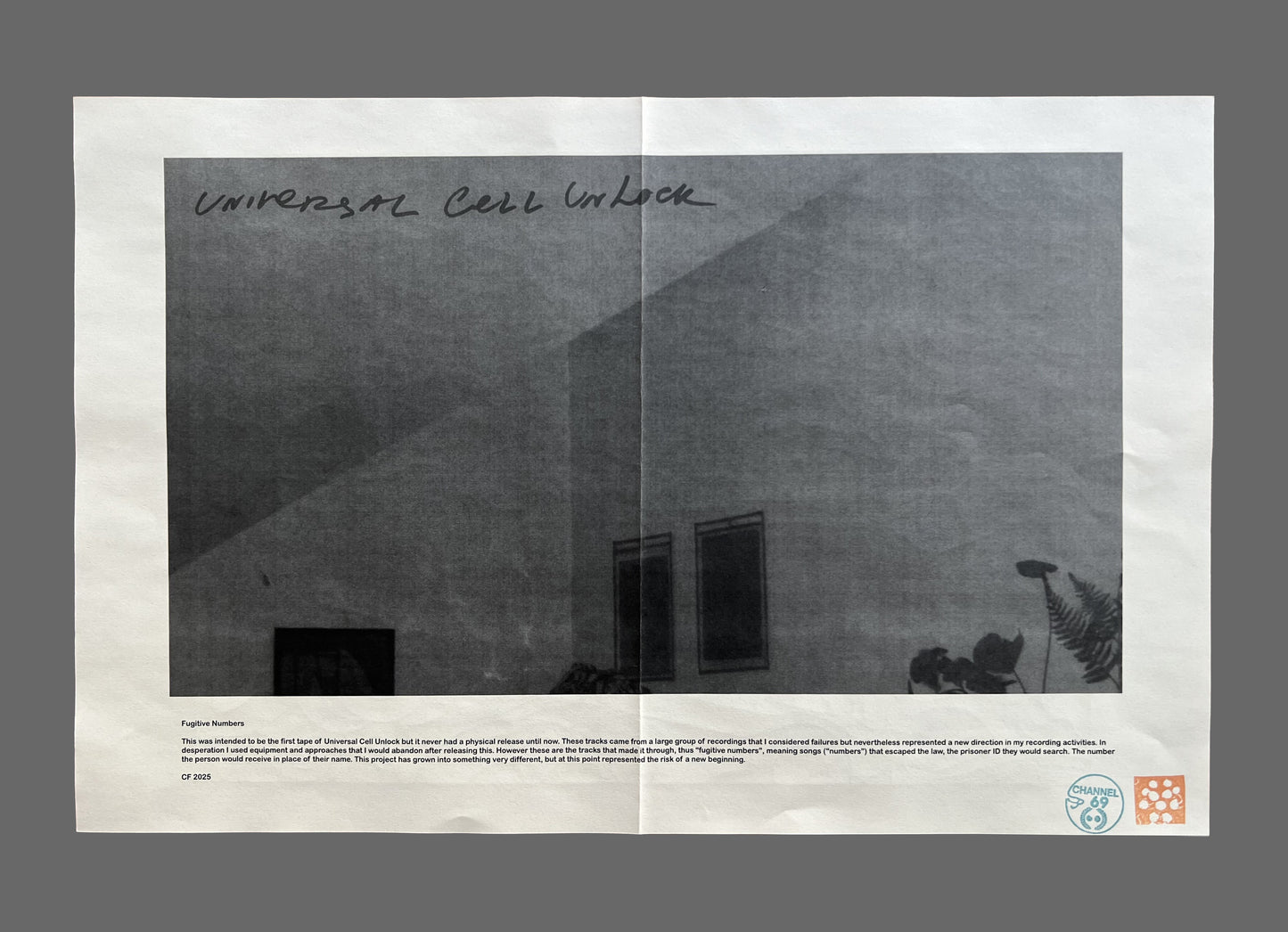
12" Music performed by CF Mastered by Nicolás Carcavilla at Galapex-Orpheus Studios Includes 11"x 17" double sided silkscreened / xeroxed / stamped print Edition of 100
Description via Bill Nace & Psychic Sounds:
Universal Cell Unlocks Fugitive Numbers feels like a record about memory. Memories looping, paused and superimposed. Something about these pieces feels monumental without reaching for it to be so. The shock of the now, a new world being born within a dying world, a new awareness crowning. A moment telescoping from the banal to the sublime and back again.
Fugitive Numbers has similarities to a film soundtrack but we discover that the film is comprised of individual scenes all glitching on pause, a plate spinner at the end of his act. I'm reminded a bit of Asmus Tietchens Biotop LP. There’s a similar sense of pacing and patience. Like motion lines in a comic panel a sense of momentum is conveyed more than development or changes of scenery, a single film cell illuminated before it flares up. Landscapes blurring into a memory blurring into a familiar smell...exhaust, cigarette smoke, a basement after a party... gone in a flash. Night of the Comet explained third hand. There’s a sense of a kind of floating speed here to me. This is definitely music meant for the car. For driving. That combination of movement and stasis that allows for memories to bubble up, to recombine, to present a challenge...that if you drive fast enough you'll create something... a new world...slip past what is known to something new and absurd, colorful and constantly shifting. To unpause the scene and let it play through.
The tracks are succinct snapshots…an inhale short and deep, exhaled and then gone... little deaths of our daily worlds expressed through overlapping memories, a pile-up of a lifetime of moments slowed down and traced....a head with 6 noses, a grinning set of teeth wrapped around a house, a plane with its legs wide open....a vhs being dubbed over again and again and again
By the end of the record we find ourselves in a room covered in gold bricks. A man approaches and we see that his lungs are on the outside of his body and are made of tiny beads of glass that illuminate with each breath he takes. As they glow with a deep dark blue our focus zooms in on a cluster of dense matter that explodes as a car cuts through it and over the radio the words "PENETRATION PENETRATION PENETRATION!" send us into a dream. --Bill Nace (Philadelphia 2025)
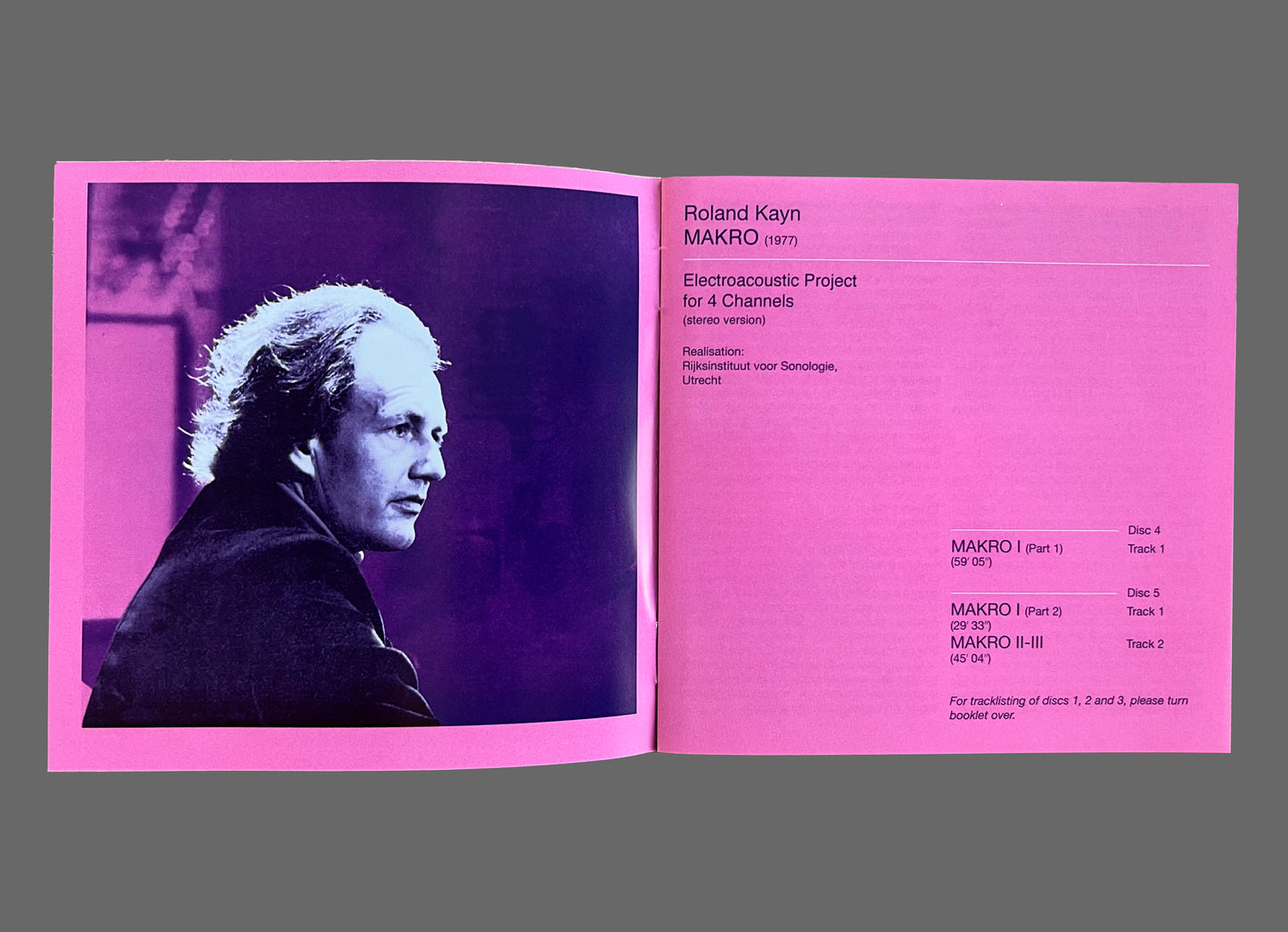
Building upon the ground of their previous “Infra”, “Scanning”, and “Tektra” collections, Reiger Records Reeks continues its dedication to Roland Kayn’s monumental back catalog, delivering “Elektroakustische Projekte & Makro”, a towering 5CD box set reissuing two of the composer’s most important bodies of work for the very first time since their respective original releases in 1977 and 1981. Fully remastered from the original analog tapes by none other than Jim O’Rourke - allowing a number of the pieces to be heard without breaks for the very first time - this collection amounts to some of the most significant efforts in Kayn’s pioneering work in the field of cybernetic music, further illuminating him as one of the most radical and groundbreaking creative voices of the 20th Century and beyond.
This box set includes the tracks from legendary opuses MAKRO I, II, III, created at the Institute for Sonology, and Elektroakustische Projekte, featuring works like Cybernetic I, II, and III, which were recorded at the Studio di Fonologia in Milan, alongside Entropy PE31, Monades, and Eon. These pieces – previously available only on rare out-of-print vinyl editions – highlight both Kayn’s innovative approach to musical structures and his significant impact on the development of electronic and cybernetic compositions.
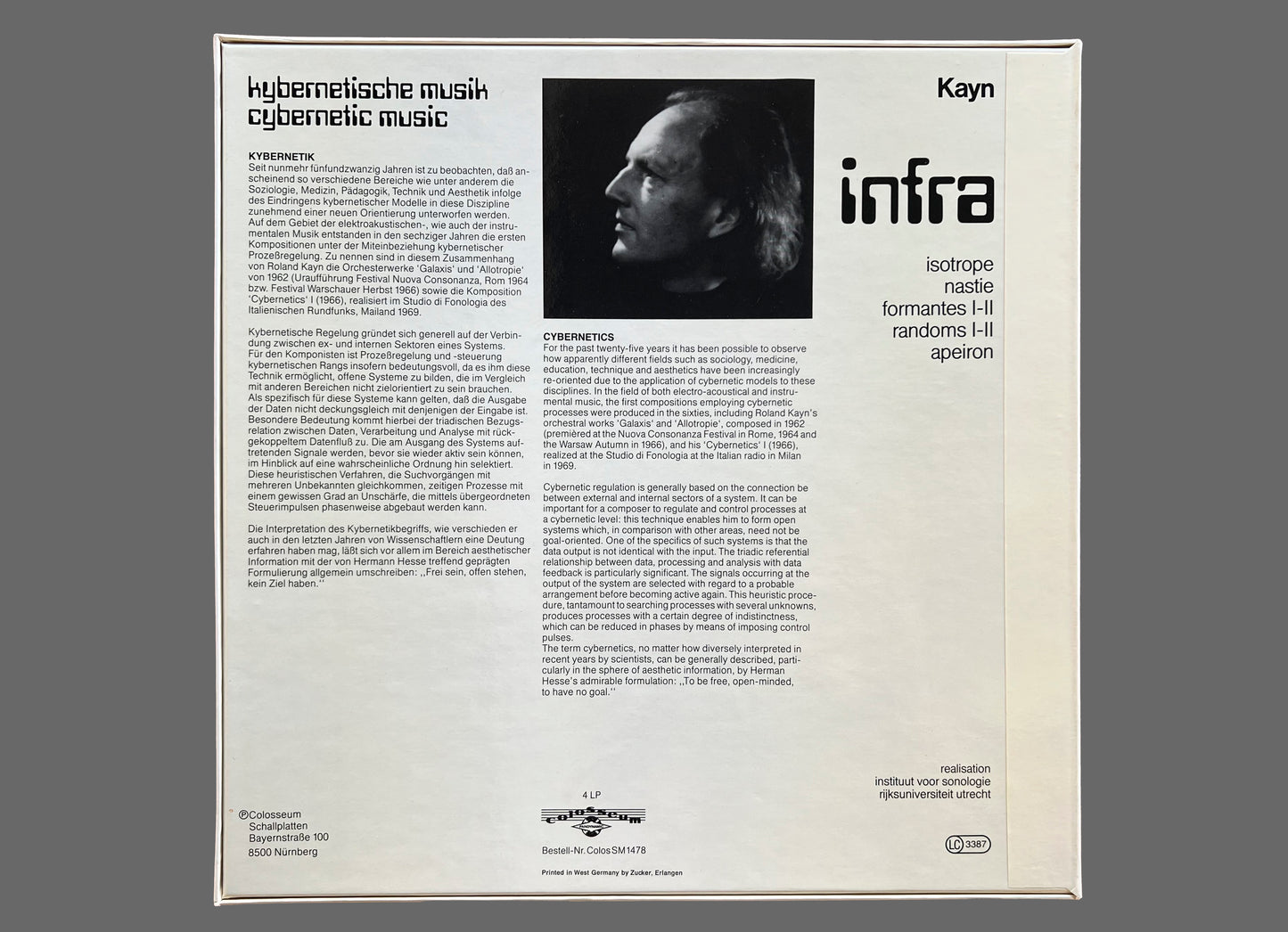
This is ‘it’. ‘Infra’. Turn the dial up and give the keys to Kayn. This one might be the best entry point for anyone looking to ‘dive in’. Enveloping and (some times) arresting. ‘Dynamic’ would be selling it short. Originally released in 1979 but could be released 15 years in the future and no one would question. Beautifully remastered by Jim O’Rourke and if you are familiar with his work on ‘Steamroom’; YEAH he’s ‘on the tip’ as well. Highest recommendation possible. Theres so much info; dive as deep as you’d like. - Ross
A pioneer of electronic, computer, and instrumental avant-garde music, for the majority of his life, the German composer Roland Kayn remained one of the great unheralded figures in the landscape of 20th century sound - a founding member of Gruppo di Improvvisazione Nuova Consonanza, who delved into singular territories entirely his own.Kayn spent most of his career working beyond the normative definitions and parameters of electronic, electro-acoustic, and computer music, endeavouring to contract an entirely new territory of sound which he referred to as Cybernetic Music, a generative process of composition through programming, carefully aligned with a constant relationship between three parameters - the cybernetical, the technical-physical, and the apperceptional.
'Tektra’ is a standout in the catalogue of Roland Kayn (1933* - 2011 †) - a legendary figure whose work bridges the early electronic innovation of his tutor Oskar Sala; the free improv experiments of his work in Gruppo di Improvvisazione Nuova Consonanza with Ennio Morricone; and the furthest limits of c.20th computer music. Despite cult acclaim from the heaviest synth heads, Kayn’s work has remained largely off-the-radar until relatively recently, with each reissue and archival deep dive now received with due reverence by new ears, ultimately leading to this, his 1984 payload of computer generated abstraction that absorbs the mind like nothing else. It’s been a proper touchstone to us for many years, and although available as compressed YouTube files, it has been out of reach in full fidelity for far too long, making this release utterly indispensable for listeners of insatiable persuasions who really want to get into it.
‘Tektra’ is the one we’d recommend any newcomer with a glint in their eye and a hunger for the true electronic spice. It stands as an ideal example of Kayn’s “cybernetic music”, in which he tasked hugely unwieldy, early computers to express unfathomably complex functions, and modelled the results in sound. In ceding as much control as possible to the machines, Kayn comes uncannily close to voicing their inner thoughts and, with it, the mysteries of the universe. This may sound a bit far-fetched, but once experienced, it’s hard not to talk about his compositions in sacred terms, touching as they do on the ineffable, the sublime, and truly transcendent in their ultra fine gradated, star system-leaping, pitchbending harmonic transitions between milky way spumed angelic chorales and phantasmically chasmic darksides.
Frankly ‘Tektra’ contains some of the greatest electronic music ever made. It utterly uproots the fundamentals of musical structure and renders it anew, deeply probing its conventions and questioning the role of the composer in the age of computer-aided sound creation. But it should be considered that it was made long before the ready availability of DAWs and their colouring book templates, effectively starting from a sort of tabula rasa to create immeasurably billowing tapestries of sound with seemingly no beginning or end, that communicate in a language of sheer sensory reception that triggers the most atavistic, as well as futuristic, sensations.
Make some time and space, and dive in head first for untold rewards. - Boomkat
Few groups in recent history forged as confounding and alchemical a body of work as Coil, the partnership of Peter 'Sleazy' Christopherson and John Balance. From album to album and phase to phase their recordings spelunk perplexing depths of esoteric industrial, occult electronics, and drugged poetry, both embodying and alienating parallel currents of their peers. The late 1990's in particular were a fertile era for the duo, embracing chance, chaos, and collaboration, enhanced by recent advancements in synthesis and sampling. Fittingly, at the summit of the decade's long, intoxicated arc, their divergent strains of interstitial ritual congealed into one of Coil's most celebrated and hallucinatory creations: Musick To Play In The Dark.
Convening at Balance and Christopherson's vast Victorian house / studio in the coastal town of Weston-super-Mare, they began a series of ambitious sessions aided by inner circle associates Thighpaulsandra and Drew McDowall. Although the creative process was admittedly “iterative” and “a bit of a drug blur,” the results are astoundingly inventive and well realized, winding through shades of divination dirge, wormhole kosmische, noir lounge, ominous humor, and black mass downtempo, guided by Balance's cryptic lunar muse, which he announces on the opening track: “This is moon musick / in the light of the moon.”
What's most remarkable about the album 20 years after its release is how brazen, insular, and unpredictable it still feels. The songs follow an allusive, altered state logic all their own, warping from microscopic ripples of glitch and breath to widescreen warlock psychedelia and back again, as much hyper-sensory as inter-dimensional. Even within a catalog as eclectic as Coil's, Musick is a mystifying collection, oneiric evocations of desire, decadence, dinner jazz, and dietary advice, far beyond the pale of whatever gothic industrial ambiguity birthed such a journey.
The record closes with a slow, starlit shuffle, bathed in seething sweeps of spectral texture and high cathedral keys, like approaching the altar of some arcane temple. As the trance thickens Balance's voice rises, processed into an increasingly eerie, gaseous haze, but he resists these unseen forces, intent on delivering a final sermon: “Through hissy mists of history / the dreamer is still dreaming / the dreamer is still dreaming.”
After leaving London in 1999 for the sleepy seaside retiree town of Weston-super-Mare, Coil co-founders John Balance and Peter “Sleazy” Christopherson set up shop in a palatial eight-bedroom estate to pursue the outer reaches of the group’s heightening cabalistic chemistry. Among the staggering string of late-era masterpieces they produced is lunar opus Musick To Play In The Dark, widely hailed as an artistic zenith upon its release. The sessions that birthed it were in fact so fruitful that a second LP took shape during the creation of the first one.
Aided by the recent addition of Welsh multi-instrumentalist engineer Thighpaulsandra, Coil mined further into the recesses of surrealist eldritch electronica Balance termed “moon music” – post-industrial spellcasting at the axis of narcotic and nocturnal energies. Musick To Play In The Dark² spans a full witching hour of bad acid sound design, synthesizer voyaging, opiated balladry, Luciferian glitch, and subliminal hymnals, alternately ominous, oracular, and absurd. Scottish gothic icon Rose McDowall guests on vocals for two tracks but otherwise the album is a hermetic affair, tapping into the group’s limitless insular synergy.
Opener “Something” is stark and incantational, a spoken word experiment for windswept voids. “Tiny Golden Books” unspools an aerial whirlpool of cosmic synth, both whispery and widescreen. “Ether” is an exercise in funeral procession piano and intoxicated wordplay (“It's either ether or the other”), while “Where Are You?” and “Batwings – A Liminal Hymn” lurk like liturgical murmurings heard on one’s death bed, framed in granular FX and flickering candlelight.
As a whole the collection skews more muted and remote than its predecessor, as if having grown accustomed to the nether regions of these darkening seances. But music box hallucination “Paranoid Inlay” captures the group’s oblique comedic side, always glimmering beneath: over a warped, wobbly beat Balance intones an opaque narrative of serenity, Saint Peter, and suicidal vegetables, accompanied by spiraling harpsichord and stuttering squelches of electronics. “It seems concussion suits you,” he repeats twice, like a macabre pickup line, before dictating a dear diary entry about risks and failures, finally concluding with as close to a self-portrait as Coil ever came: “On a clear day I can see forever / that the underworld is my oyster.”
Initially a rough demo tape recorded solely by Coil member Drew McDowall, Time Machines started to take full form when McDowall enthusiastically delivered these demo recordings to bandmates John Balance and Peter 'Sleazy' Christopherson as sketches for a new Coil project with the primary goal of shifting Coil’s sound further into a more conceptually abstract direction. Largely recorded in 1997 using single takes with minimal post production, these four drones contain every intended fluctuation and tone, along with every glitch of the original – “Artifacts generated by your listening environment are an intrinsic part of the experience.
Each of the four pieces on Time Machines is named after the chemical compound of the hallucinogenic drug that they were composed for. Time Machines was meticulously crafted to enable what John Balance referred to as "temporal slips" in time and space, allowing both the artist and audience to figuratively "dissolve time".
The compact disc edition includes reproductions of the six original vinyl stickers and comes housed in a gatefold chipboard digipack featuring spot gloss overlay.
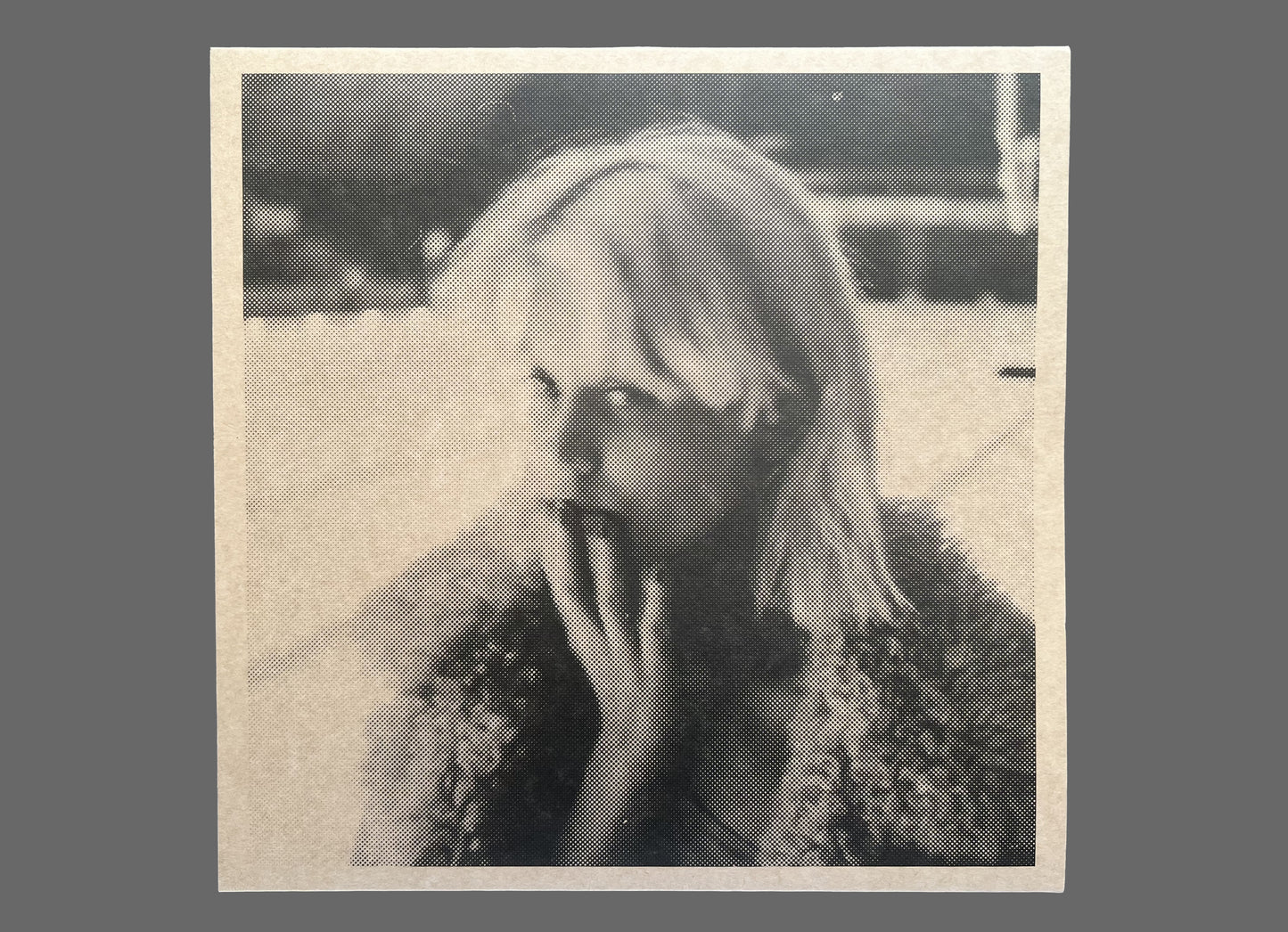
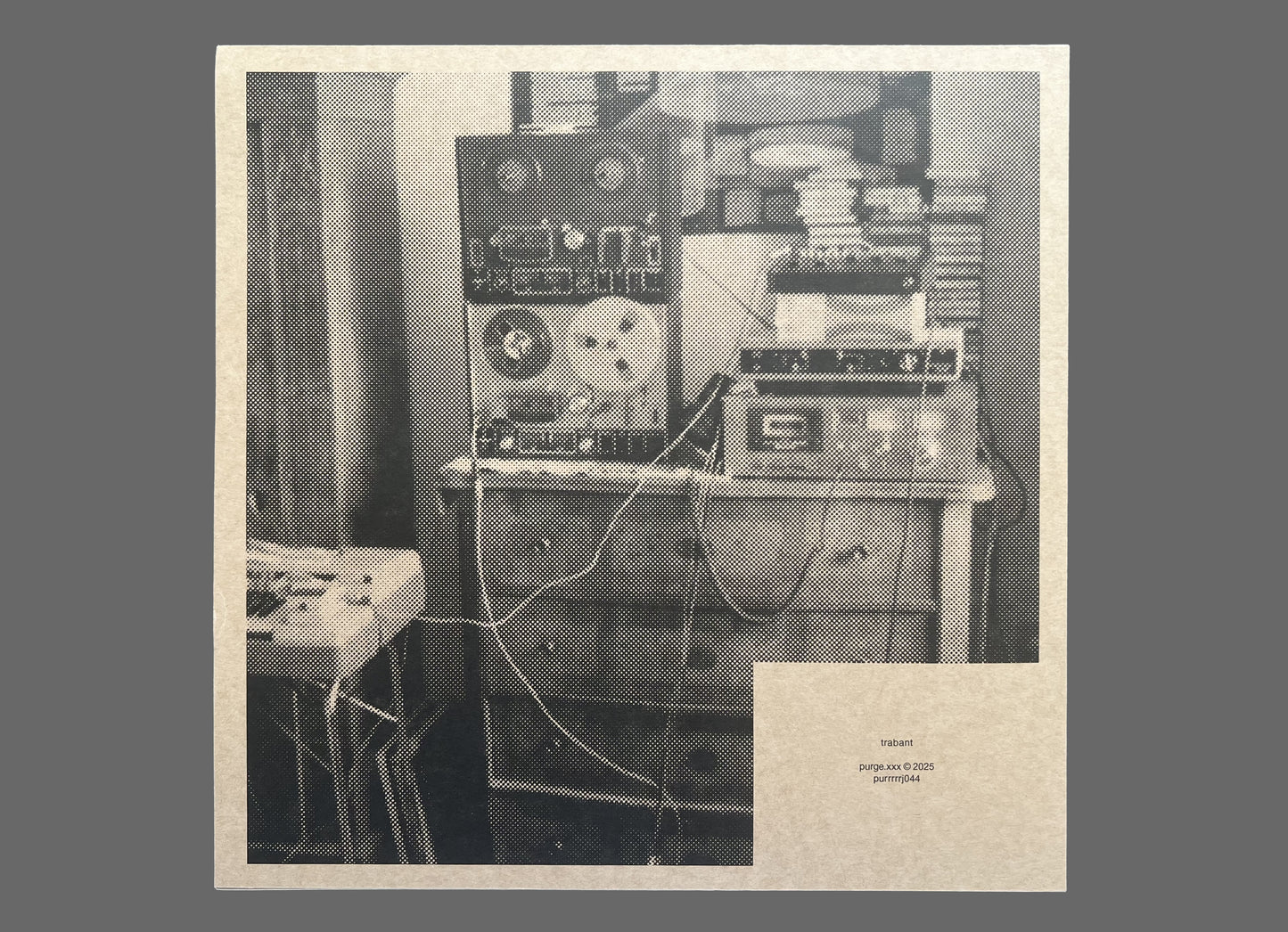
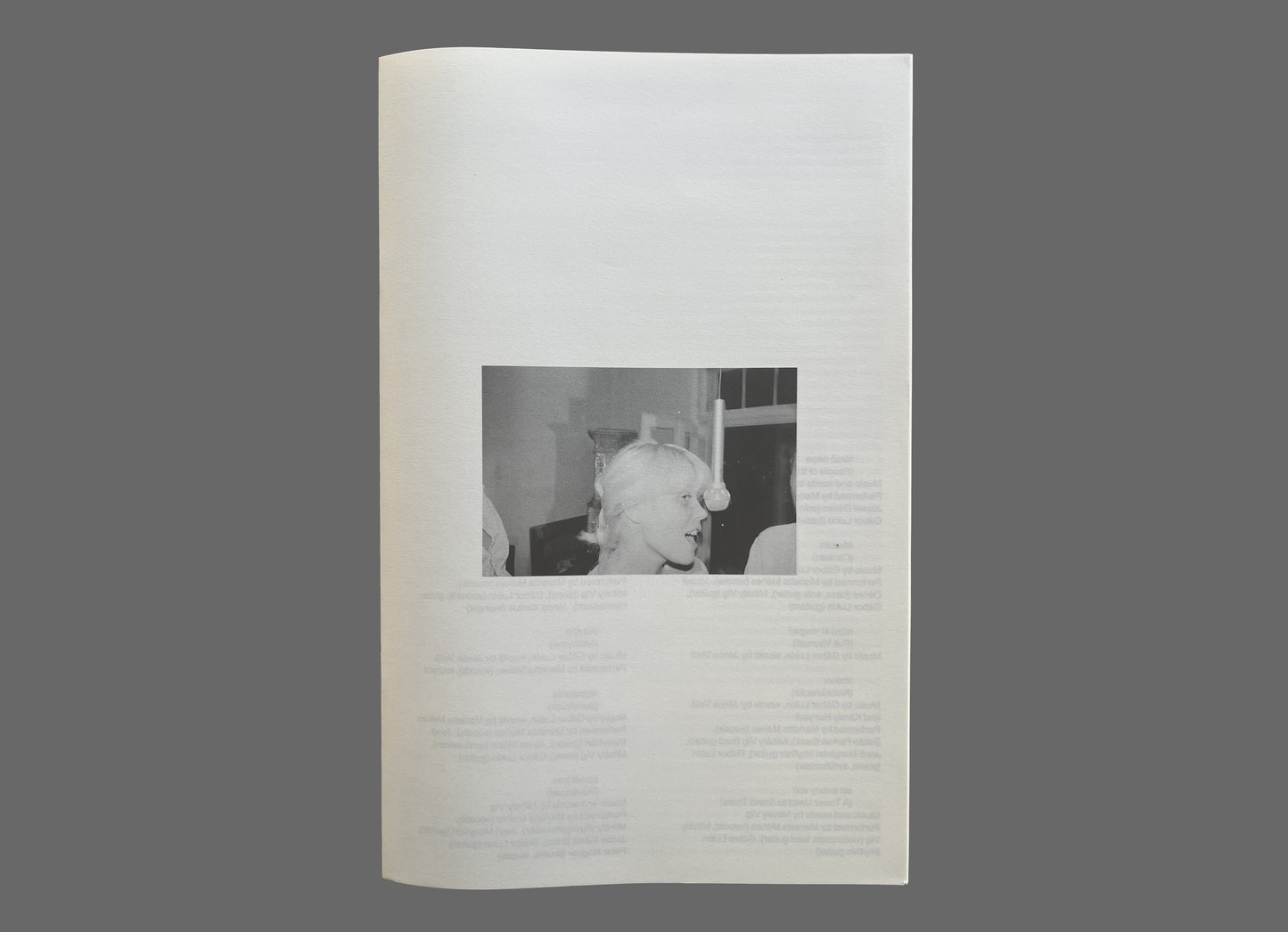
Purge.xxx has generously gifted an additional collection of unreleased material from the Hungarian art rock / post punk group / collective Trabant.
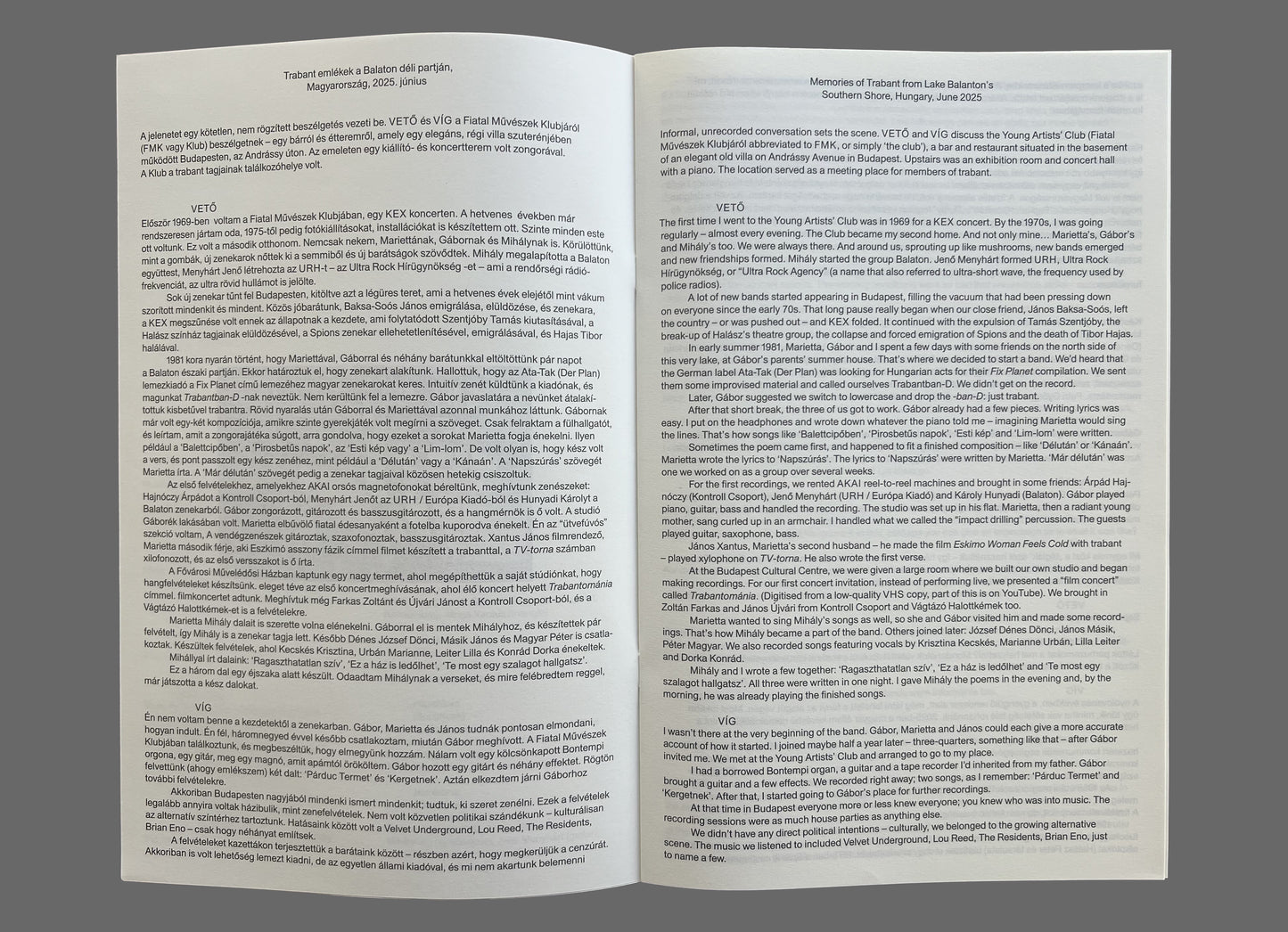
‘Trabant II’ is housed in astunning one-color silk screened craft sleeve and includes a 20 page folded and stapled booklet containing an extensive interview, photos, and lyrics in Hungarian and English.
Just when we thought the mines were dry… essential stuff.
RIYL P Doray’s Ruth, Palo Alto’s Zru Vogue, Post Young Marble Giants / Weekend, Nico.
Artists’ Info via Soundohm:
Active between 1980 and 1987, Trabant was one of the most remarkable Hungarian gestures of countercultural creativity, flowering from behind the iron curtain during the period of its run. A loose collective of young songwriters and amateur musicians, with a continuously evolving lineup of contributors, including Mihály Víg, János Vető, György Kozma, Károly Hunyady, Gábor Lukin, János Xantus and József Dénes "Dönci", the visual artist and actress Marietta Méhes, and numerous others. Forced into the margins by their membership within Hungary's explicitly outlawed, anti-authoritarian underground music scene, the group's only official release, prior to Purge's first collection, was a promotional 7" for a film in which the core members starred. Given the circumstances within which they worked, Trabant rarely performed publicly and never worked in studios, but were remarkably prolific, writing songs and producing a body of hundreds of individual DIY recordings, conceived for future release, and occasional appearances in films. It is this sprawling body of largely (if not exclusively) never-before-released archival recordings from which the label's second collection dedicated to the band, Trabant II, has been drawn.
While their lyrical content — described as "enigmatic, intertextual, grotesque and absurd" — will only be accessible to those who speak Hungarian (and by cross-referencing their English translations in the liner notes), the radical, bristling spirit with which Trabant's music was created retains every ounce of its potency and is easily discerned across the collection of tracks that comprise Purge'sTrabant II. Resting at the junctures of post-punk, folk, synth pop, art rock, and experimentalism, the LP unfurls as a journey into the realms of slightly off-kilter, joyous left-field pop, threading territories of expression familiar to fans of roughly contemporaneous bands Young Marble Giants, The Pastels, The Vaselines and The Raincoats — drum machines, synths, jangling guitars, and achingly direct vocals — with more devolved, dense, and nostalgia-laden passages, forming what is easily among the most striking artifacts of 1980s post-punk and indie pop that we can call to mind. Born from necessity, embracing the creative, sonic act as a form of vital resistance that transcends political boundaries, encountered decades since these tracks were first laid to tape in Trabant's makeshift studio — transforming limitation into liberation — each moment feels startlingly contemporary and urgent on both musical and sociopolitical terms, reminding the listener that even the most vital human acts can also be joyful and fun.
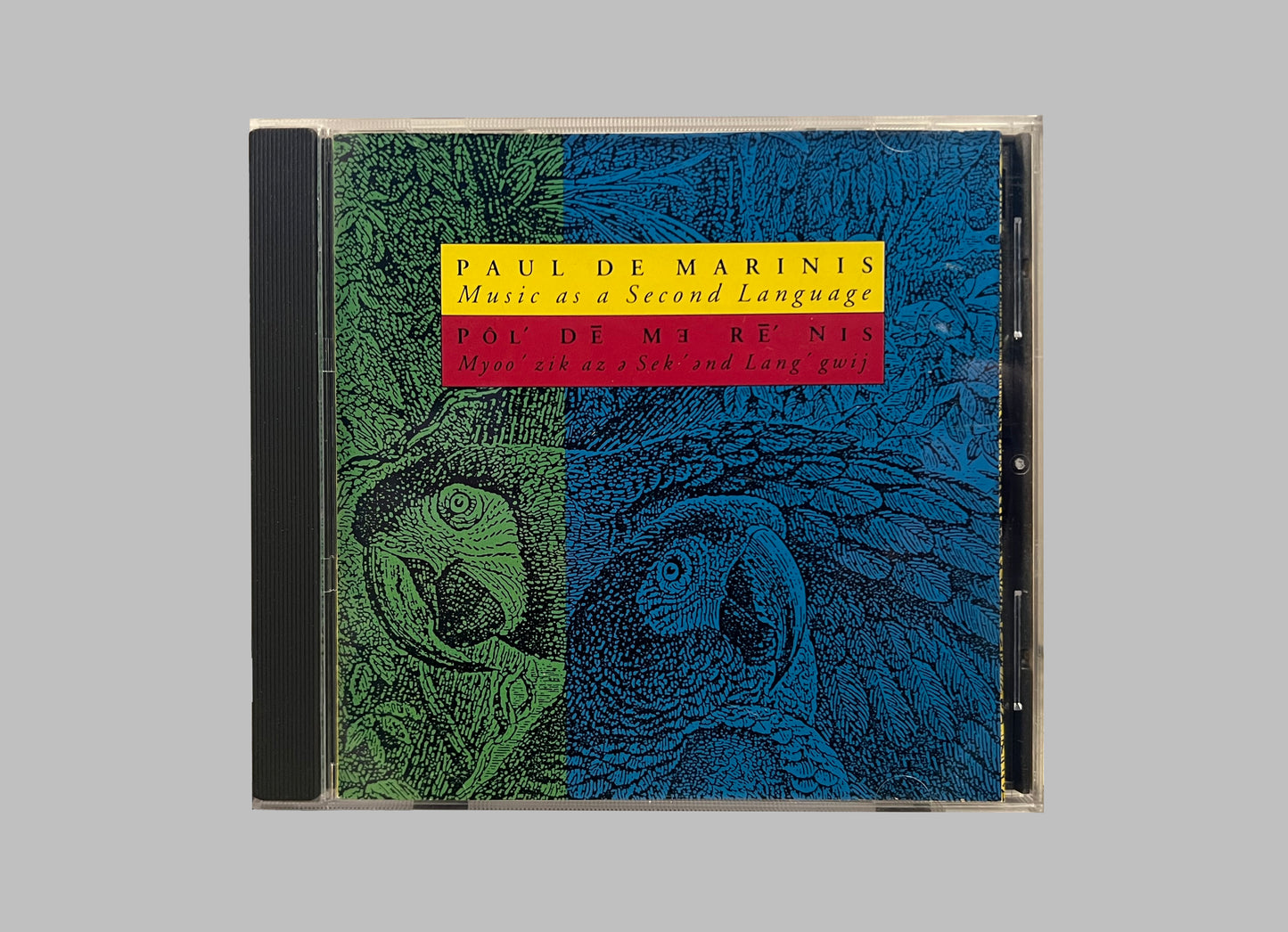
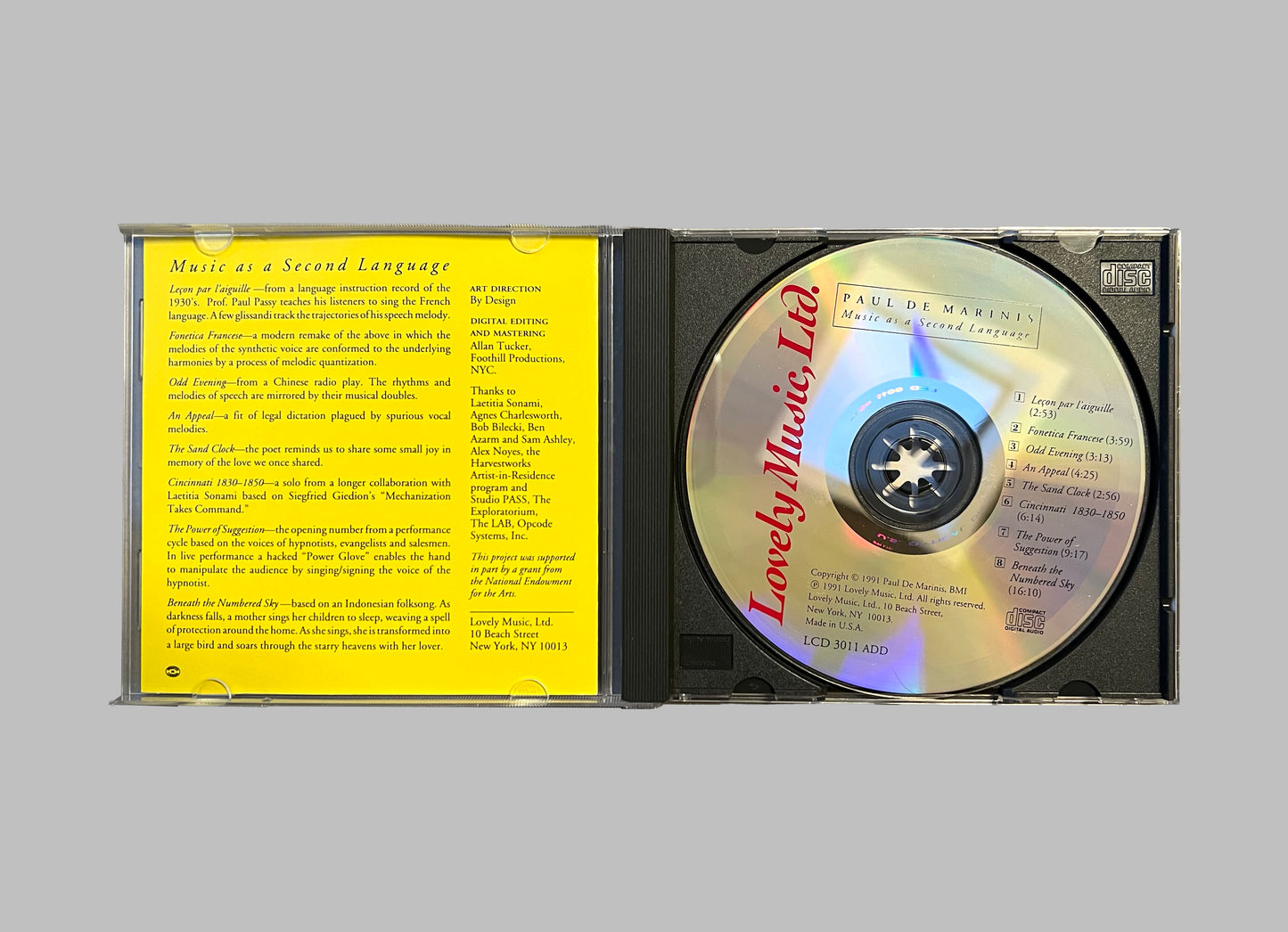
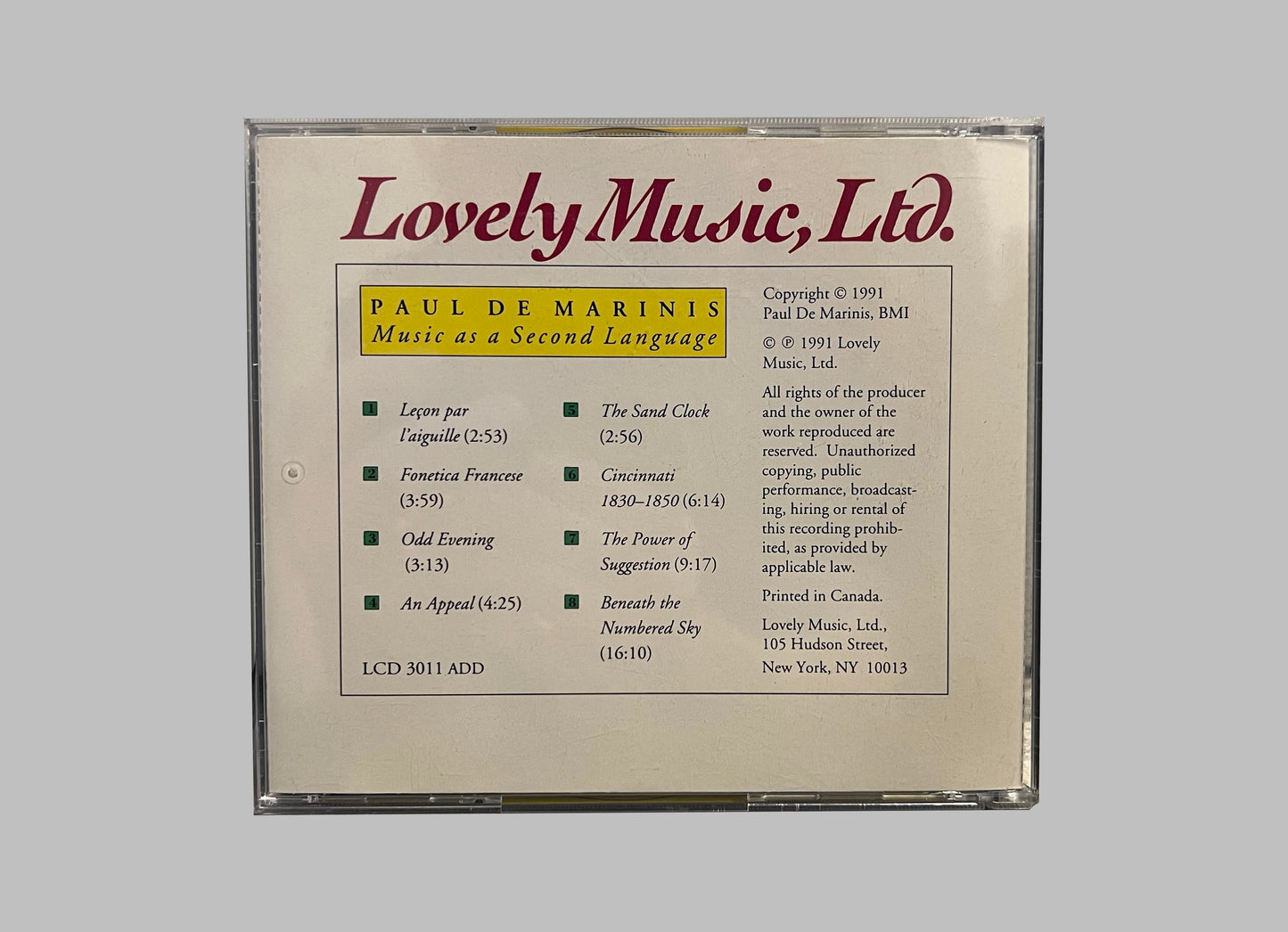
Paul De Marinis - Music As A Second Language CD (LCD3011)
Regular price
$15.00 USD
Regular priceSale price
$15.00 USD
Unit price/ per
Sale
Sold out
CD 2019 Repress Jewel Case Insert with Liner Notes Art Direction By Design Digital Editing and Mastering by Allan Tucker Lovely Music - (LCD 3011CD)
I can confidently say this albums sits at the top of my 'favorites list' within the Lovely Music, Ltd. catalog. Eloquently sequenced; evenly laced with humor and spirituality. Immaculate, immersive, and thought provoking. The best kept secret? - Ross
Description via De Marinis:
"God is perhaps not so much a region beyond knowledge as something prior to the sentences we speak." — Michel Foucault
Hidden beneath speech's words and music's melodies I hear the singing of a voice more ancient than language. Brain's secret convulsions making muscles articulate, shaking the world with a song now lost to us except perhaps in laughter, giving birth at last to a duality of sound and meaning. Now we can write or read, compose or listen, speak and converse even about our words themselves. No longer are we aware that as we speak our voices rise and fall, following the deeper contours of speech melodies that prefigure our sense and our meanings. Even our music ceased long ago to sing these melodies, following instead the steady course of harmonic progression. Still, as we read a text, we must reconstruct the melodies of the writer to grasp the meaning. Still, we code our feelings in the melody of our speech. And still, as our leaders talk, hearing not the words but the music, we sing our quiet selves into a sleep of understanding. The whistles of the birds in our nose, the creaking door which closes a phrase, the measured pause which precedes a two-beat putdown – all these underlie the choice and order of our words. These are the ghosts in grammar's basement.
In many of my recent songs for synthesized voice I have treated speech melodies as musical material. By a process of computer analysis and resynthesis I extract the melodic line of spoken language, involve it in a variety of compositional transformations, and apply the result to digital musical instruments. Along the way, the original voice becomes more or less disembodied, but retains much of the original spirit and meaning. With the computer analysis model I can alter voicing – changing the speech into drones of whispers, articulation rate – speeding or slowing the speech independent of pitch, as well as a variety of other effects, many of which sound unfamiliar but agree with the kinematics of the vocal tract. As I compose, I listen and I think. I choose vocal sources which interest me, particularly the voices of evangelists, hypnotists and salesmen because of their great confidence and enthusiasm. — Paul De Marinis
CD 2021 Repress Jewel Case Insert with Liner Notes Art Direction By Design Digital Editing and Mastering by F. Tarantino (Fantasy Studios, Berkeley, CA) Lovely Music - (LCD 2061)
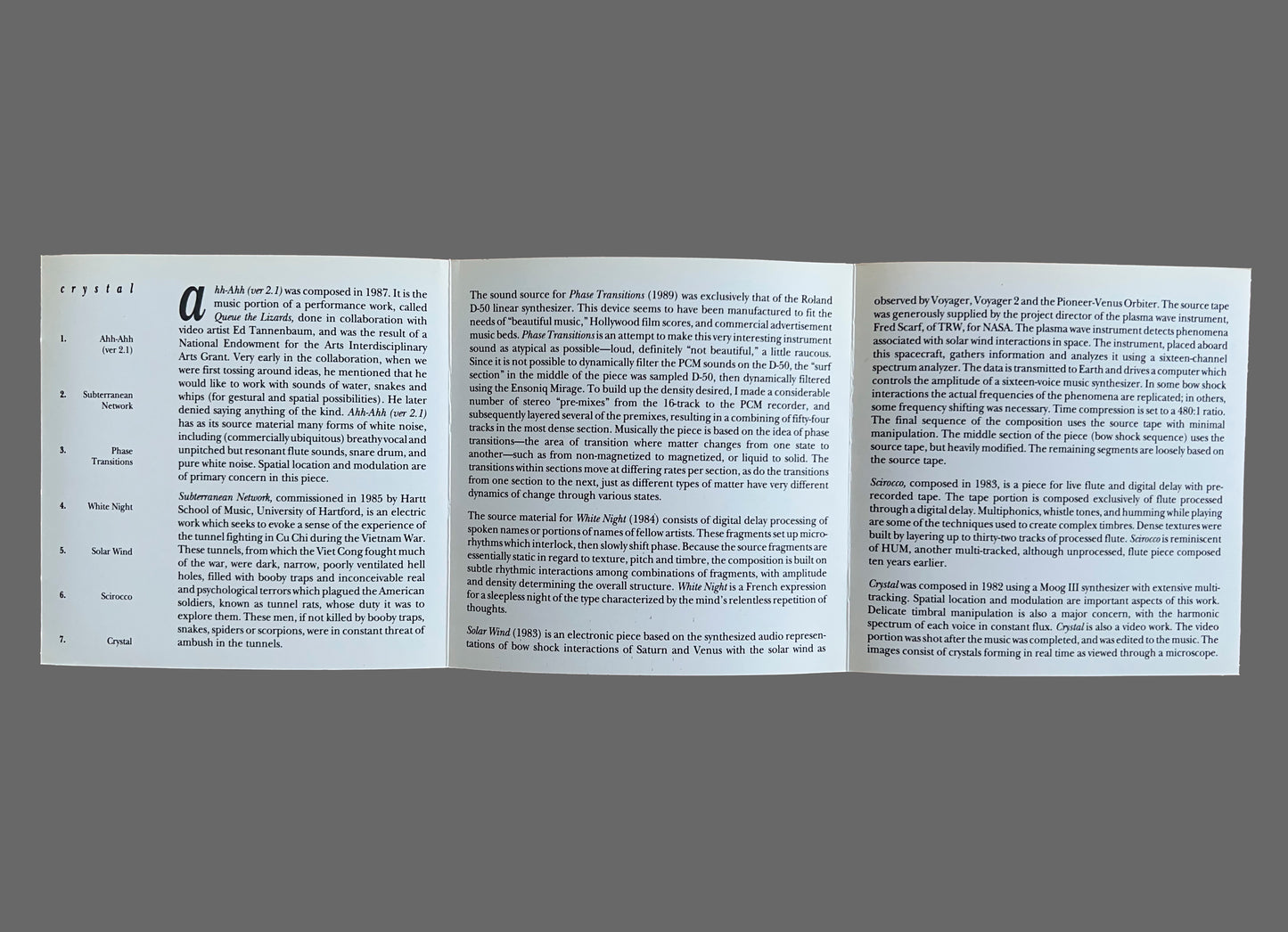
Originally released on Lovely Music in 1986. Maggi Payne's musical imagination is vivid: she is interested in the surreal, the inward, the micro, and the accumulation of physical and psychological tension. Periods of silence gently evolve into flowing drones of complex resonances. Oozing drones evolve into dense and powerful peaks of short duration. On one cut, multi-tracked voices shift in and out of phase, creating alternately shimmering and percussive patterns; on another, digital delay and 32 separate flute tracks create a rain forest where instruments call to each other like chrome birds. The compositions and sounds on Crystal have incredible depth, a profound logic and, though not "pretty", an irresistible beauty. Personnel: Maggi Payne - flute, synthesizers electronics.
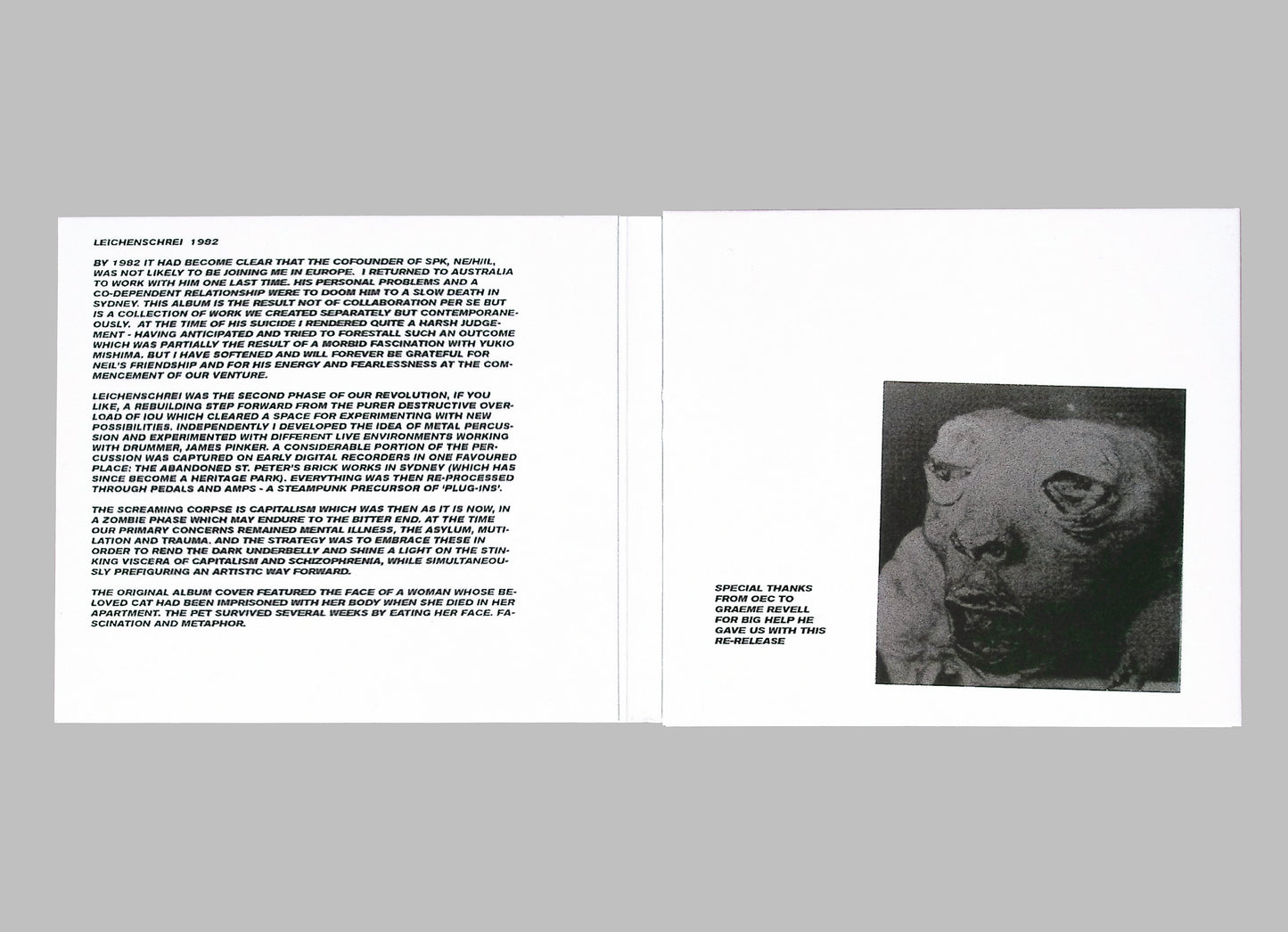
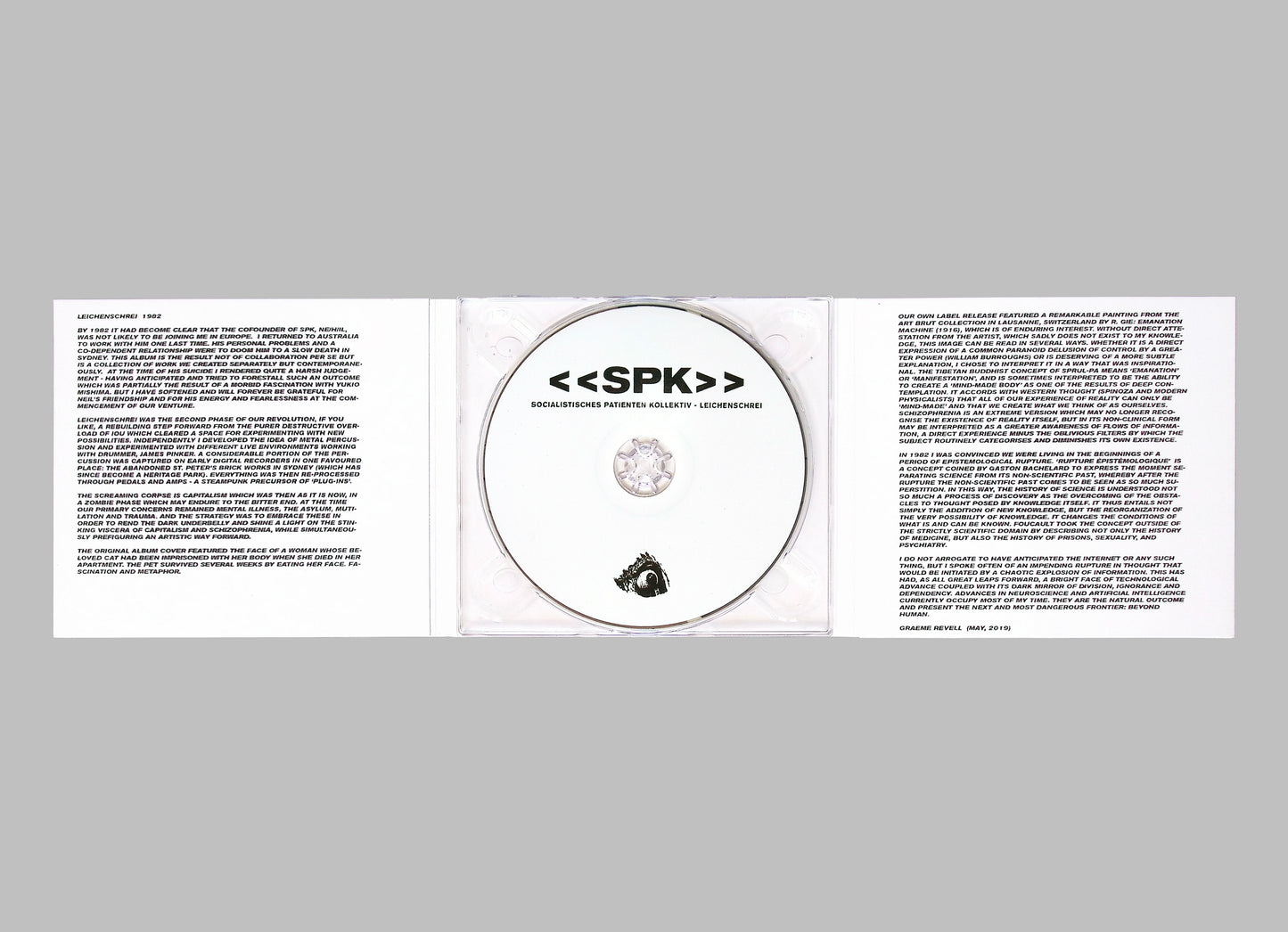
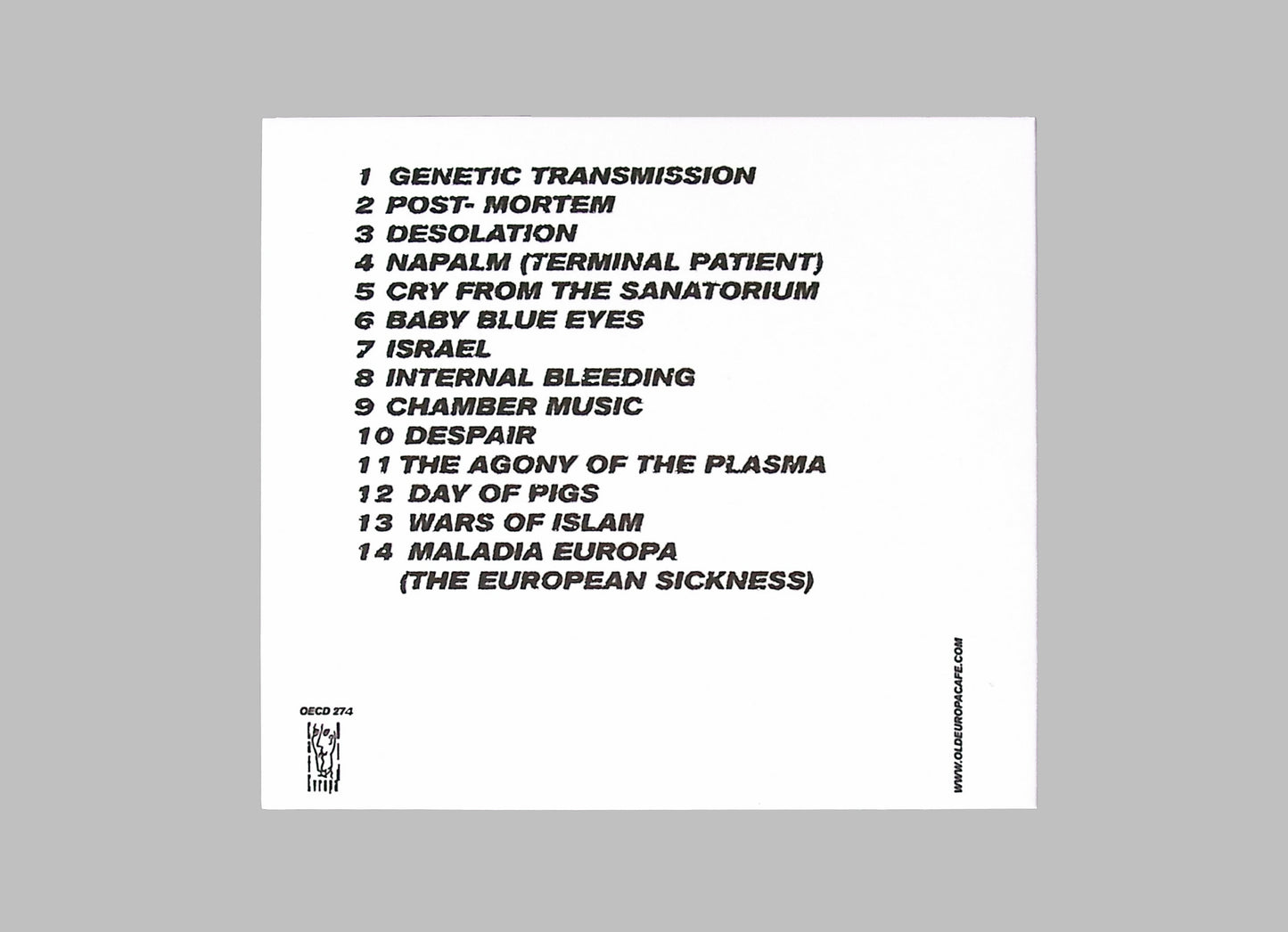
6 panel digipack Exclusive liner notes by Graeme Revell (2019) Old Europa Cafe - OECD 274)
'What to say about ‘Leichenshrei’? If you haven’t drank the juice of ’79s ‘Information Overload Unit’. ‘82s ’Leichenshrei’ is going to force feed you through the rustiest funnel you can imagine. SPK reveals its ambitions; their sound becomes more refined but still unmuzzled and foaming through its rotting teeth. This is getting graphic; don’t turn it off. Play it again (and does it get any louder?). Change your life. ALL TIMER.' - Ross